More Boulder election coverage: Read about the Boulder City Council race and the results of city and county ballot measures, including the $400 million bond proposal. Follow the latest vote counts in our election results tracker.
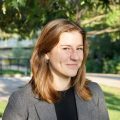
Mayor Aaron Brockett has been decisively reelected to a third term as Boulder’s mayor.
Brockett has served as mayor for the past five years, after serving as a city councilmember for six years. He narrowly won Boulder’s first direct mayoral election in 2023 and sought reelection this year, saying he wanted to continue the work council began under his leadership. Political newcomer Aquiles La Grave, his closest challenger, centered his campaign on criticism of Brockett’s record and leadership, framing the election as a referendum on the state of the city.
With more than 60% of the votes counted late Tuesday night, Brockett had received about 50% of the vote, compared with 25% for La Grave.
Councilmember Taishya Adams finished third, with 17% of the vote in the second round of ranked-choice tabulation. Adams chose to run for mayor instead of seeking reelection to the city council, meaning she will leave her council seat.
This will be Brockett’s final term under the city’s term limits.
Brockett celebrated Tuesday night at a watch party at Rosetta Hall after a campaign he described as difficult and hard-fought.
Much of the campaign was defined by La Grave’s blunt criticism of Brockett and city leadership. In one video that circulated widely in Boulder’s political circles, La Grave described Brockett as “fucking milquetoast.”
On Tuesday night, Brockett toasted the room with a quip. “Raise a glass — a glass of milk. A toast,” he said with a grin. The crowd cheered.

“We have shown that when you have a positive message, when you have done the work in our community, that voters recognize that,” Brockett said, thanking his supporters. “Super excited to get over with the campaigning and back to governing.”
The City of Boulder uses a form of ranked-choice voting to elect its mayor. If no candidate receives more than 50% of first-choice votes, the candidate with the fewest first-choice votes is eliminated and that candidate’s votes are redistributed to the next-ranked candidates on those ballots.
The system, which voters approved in 2020, is designed to ensure that the winner has broad support among voters.
Brockett had a strong lead on election night, with 49% of the first-choice votes and 50% after votes for the bottom three candidates — Lisa Ann Jacobs, Jamo Goldstein and Grateful Fred — were redistributed.
Additional Election Day ballots remained to be counted Tuesday night. Historically, younger and more left-leaning voters have tended to cast their ballots later.
Brockett said he and La Grave hugged Tuesday night and that La Grave congratulated him on his victory.
La Grave said he considered his campaign a success, taking credit for driving the narrative in this election, including around city financial accountability.
“Why am I calm? I got it all done,” La Grave said during a watch party at the Velvet Elk Lounge.
“Obviously the outcome wasn’t what I wanted. If I didn’t win, I wanted it to be Aquiles,” Goldstein, a CU Boulder student who was running for mayor, said during the watch party. “Overall, I think it’s been one of the most educational things in my life.”

The election capped a contentious campaign.
Brockett held endorsements from prominent local elected officials, including state Sen. Judy Amabile, state Rep. Junie Joseph, Boulder County District Attorney Michael Dougherty and every current councilmember except Adams. He also had the endorsement of Boulder Progressives.
Both La Grave and Adams ran as candidates promising change, citing concerns about the city’s fiscal planning and calling for greater council oversight of the city manager, one of the few city staff members who report directly to the council.
Adams’ campaign focused on her policy goals, particularly equity and climate resilience, while La Grave’s was a direct rebuke of Brockett, city staff and the city’s financial management, particularly over the controversial $400 million bond measure, which appeared headed for defeat Tuesday night.
La Grave had the support of some former councilmembers and business owners, including local entrepreneur and investor Dan Caruso, who spent $16,000 on the city election. He also raised more than any other candidate — $44,500 as of Oct. 29 — after declining to accept city matching funds, which capped fundraising at $24,731.

La Grave’s fundraising advantage and sharp criticism of city policies helped make him a prominent challenger and shaped much of the race.
But he also faced criticism from across the political spectrum from people who said his campaign conduct went too far or that his campaign included misleading claims.
“I don’t believe you should give an incumbent a free pass,” La Grave said Tuesday night. “This town was ready for a conversation.”
People began filing out of the Velvet Elk before the second batch of results was posted. La Grave said he planned to be home watching Netflix by 9:30 p.m.

Brockett’s reelection marks the start of his final term after more than a decade in city government.
A co-founder of a software development firm, Brockett served on the city’s Planning Board from 2011 to 2015 before being elected to the Boulder City Council. He served there for six years before his fellow councilmembers appointed him mayor in 2021, when he left his job to focus on the role.
In 2023, after Boulder voters approved directly electing their mayor through ranked-choice voting, Brockett narrowly won the city’s first direct mayoral election.
Brockett said he wants to use his final term to continue expanding affordable housing, preparing for wildfire, addressing the city’s budget deficit and reducing homelessness.
“Housing has always been a focus of mine, and I’m looking forward to getting more housing wins accomplished in the next couple of years,” Brockett said. He has helped advance zoning and code changes intended to expand housing opportunities, including affordable housing.
Brockett had a simple final election night message for residents: “Thanks so much for your confidence and your trust. I won’t let you down.”